
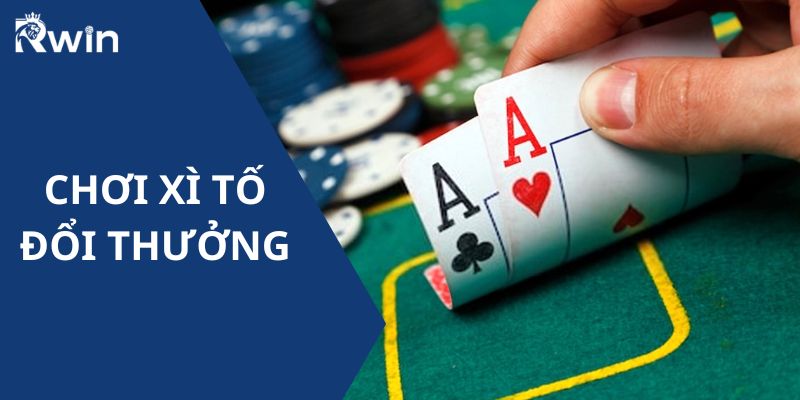
Playing poker for rewards has become a favorite choice of many gamers thanks to its extremely simple rules and betting methods. Moreover, the bets of this card game also give players the opportunity to earn billions. To better understand this game, you should start learning from the betting principles prescribed by JL14!
A few words about playing poker for rewards at the house
According to information from the support team, playing poker for rewards depends a lot on the player’s skills, strategies and psychology, which play a decisive role in winning. The game uses a standard deck of 52 cards, with cards arranged from A (highest card) to 2 (lowest card).
The special feature of Poker is that players can bet based on the strength of their hand, their ability to judge their opponents’ cards and their bluffing strategy. Each Poker game includes many betting rounds, opening up opportunities for players to demonstrate flexible strategies.
Actions such as raise, call or fold all require careful calculation to optimize the ability to win or minimize risk. In addition, playing poker for rewards at JL14 has many different variations such as 5-card Poker, 7-card Poker, each with different rules and ways of playing, suitable for the preferences of each player.

The latest rules of playing poker for rewards at JL14
Before entering the top games, you need to clearly understand the rules of playing poker for rewards. For long-time members, we may be familiar with the rules of the game, but for newbies, it may be quite difficult. Therefore, please master the content shared below.
In each game of poker, from 2 to 6 people will participate in betting. The system uses a deck of 52 Western cards to deal cards. The big difference between Xi To and traditional Poker is that it only uses 32 cards from 7 to A to compete.

Update detailed poker rules for newbies
Each player will receive 2 face-down cards on the betting table. Then, the system will deal 3 more face-up cards in the middle of the betting table. Each game will go through 3 betting rounds, each round the system will deal 1 corresponding face-up card.
At the final betting round, there will be a total of 5 face-up cards on the table. Players will combine 2 of their cards with 3 of the 5 face-up cards to form complete sets.
If there is only 1 player left with the largest bet amount that no one can follow, that person will win. If there are many players continuing to bet, the system will compare scores to find the winner.
Effective poker tips to improve your chances of winning
To become a successful poker player and improve your skills, you need to apply specific playing tips. These tips not only help you practice your skills but also improve your ability to predict your opponent’s intentions.
Choose the time to attack
Knowing when to attack and when to wait is an important factor. When you have a strong hand, do not hesitate to bet big to put pressure on your opponent. On the contrary, when your hand is weak, you should consider defending or folding to protect your capital. Choosing the right time helps you control the game effectively and makes it difficult for your opponent to predict your cards.
Read your opponent
In betting, people often apply the saying “know yourself, know your enemy, and you will win a hundred battles”. Therefore, when participating in playing poker for rewards, you need to pay special attention to this. Observe your opponents to recognize the tactics they use.
Tactics to apply in how to play poker for rewards
Especially, with inexperienced players, they often easily reveal their facial expressions, so guessing their cards will become quite simple. However, with opponents with many years of experience, you need to be very careful and alert to be able to control the game.
The art of bluffing
Bluffing is an effective poker tip that helps you win even with a weak hand. However, to bluff successfully, you need to be skillful and calculate carefully. Don’t overuse bluffing, because this will make it easy for your opponent to “read your cards”. Choose the right time to bluff, especially when your opponent shows signs of wavering or the table is not favorable for strong hands.
Actively control the pace of the game
When c